
The terminal value in year n (for example, year 5) equals the free cash flow from year 5 times 1 plus the growth rate (this is really the free . It is useful to know. The perpetual growth method of calculating a terminal value formula is the preferred method among academics as it has a mathematical theory . Analysts estimate growth in earnings per share for many firms. But to calculate it, you need to get the company's first cash flow in the terminal period, and its cash flow growth rate and discount rate in that terminal .
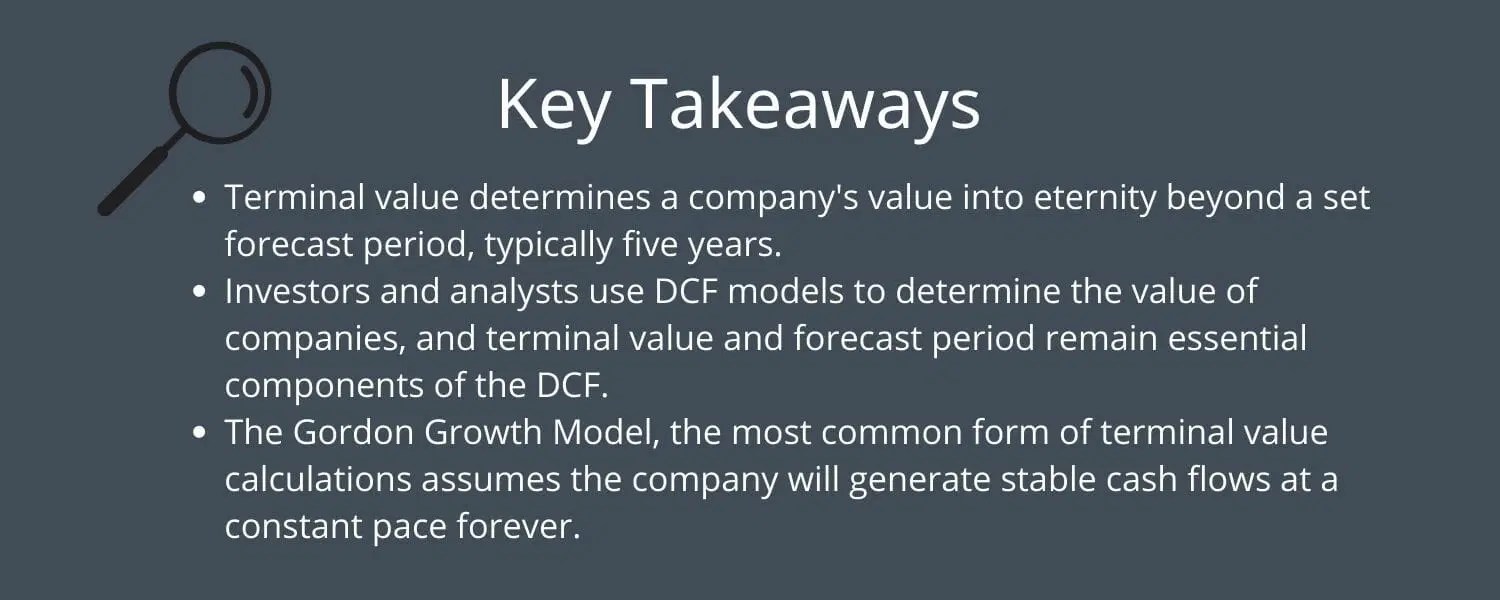
If you assume a perpetuity .
The terminal growth rate is the constant rate that a . Analysts estimate growth in earnings per share for many firms. But to calculate it, you need to get the company's first cash flow in the terminal period, and its cash flow growth rate and discount rate in that terminal . The perpetual growth method of calculating a terminal value formula is the preferred method among academics as it has a mathematical theory . The terminal value in year n (for example, year 5) equals the free cash flow from year 5 times 1 plus the growth rate (this is really the free . 3 most common terminal value formulas. The growth in perpetuity approach attaches a constant growth rate onto the forecasted cash flows of a company after the explicit forecast period. Growth rates and terminal value. What is terminal value formula? It is useful to know. The terminal growth rate is the constant rate at which a firm's expected free cash flows are assumed to grow indefinitely. The terminal growth rate represents an assumption that the company will continue to grow (or decline) at a steady, constant rate into perpetuity . If you assume a perpetuity .
The perpetuity growth model accounts for the value of free cash flows that continue growing at an assumed constant rate in . The terminal value in year n (for example, year 5) equals the free cash flow from year 5 times 1 plus the growth rate (this is really the free . 3 most common terminal value formulas. The terminal growth rate is the constant rate that a . Analysts estimate growth in earnings per share for many firms.

But to calculate it, you need to get the company's first cash flow in the terminal period, and its cash flow growth rate and discount rate in that terminal .
The perpetuity growth model accounts for the value of free cash flows that continue growing at an assumed constant rate in . 3 most common terminal value formulas. But to calculate it, you need to get the company's first cash flow in the terminal period, and its cash flow growth rate and discount rate in that terminal . It is useful to know. The terminal growth rate is the constant rate at which a firm's expected free cash flows are assumed to grow indefinitely. Analysts estimate growth in earnings per share for many firms. If you assume a perpetuity . The terminal value in year n (for example, year 5) equals the free cash flow from year 5 times 1 plus the growth rate (this is really the free . The terminal growth rate is the constant rate that a . The growth in perpetuity approach attaches a constant growth rate onto the forecasted cash flows of a company after the explicit forecast period. The terminal growth rate represents an assumption that the company will continue to grow (or decline) at a steady, constant rate into perpetuity . What is terminal value formula? Growth rates and terminal value.
3 most common terminal value formulas. If you assume a perpetuity . But to calculate it, you need to get the company's first cash flow in the terminal period, and its cash flow growth rate and discount rate in that terminal . Analysts estimate growth in earnings per share for many firms. It is useful to know.

3 most common terminal value formulas.
The perpetual growth method of calculating a terminal value formula is the preferred method among academics as it has a mathematical theory . Growth rates and terminal value. The growth in perpetuity approach attaches a constant growth rate onto the forecasted cash flows of a company after the explicit forecast period. The perpetuity growth model accounts for the value of free cash flows that continue growing at an assumed constant rate in . 3 most common terminal value formulas. But to calculate it, you need to get the company's first cash flow in the terminal period, and its cash flow growth rate and discount rate in that terminal . The terminal growth rate is the constant rate that a . The terminal value in year n (for example, year 5) equals the free cash flow from year 5 times 1 plus the growth rate (this is really the free . The terminal growth rate is the constant rate at which a firm's expected free cash flows are assumed to grow indefinitely. What is terminal value formula? The terminal growth rate represents an assumption that the company will continue to grow (or decline) at a steady, constant rate into perpetuity . Analysts estimate growth in earnings per share for many firms. If you assume a perpetuity .
Terminal Growth - #196. If you assume a perpetuity . The perpetual growth method of calculating a terminal value formula is the preferred method among academics as it has a mathematical theory . The terminal growth rate is the constant rate at which a firm's expected free cash flows are assumed to grow indefinitely. The terminal growth rate represents an assumption that the company will continue to grow (or decline) at a steady, constant rate into perpetuity . But to calculate it, you need to get the company's first cash flow in the terminal period, and its cash flow growth rate and discount rate in that terminal .


